culture
Community Spaces Are Still a Format
Live audio rooms keep working as a neighborhood format. The corner treats them like a weekly notice on the board, a table you can hear from the sidewalk, never a stadium show.
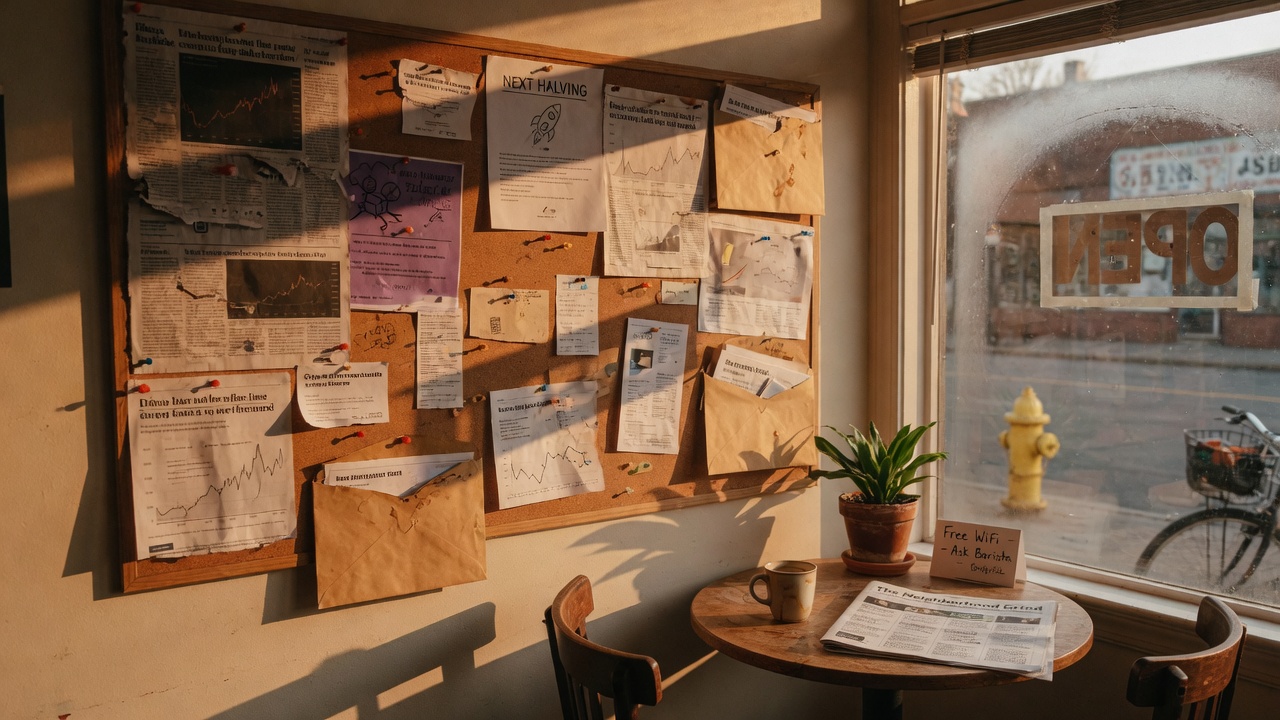
A room with a pin
A space is a room you can hear from the sidewalk. That is the whole format. Host, hour, regulars, a door that stays unlocked for a little while. The corner files community spaces the way a shop files a weekly club notice: not as a concert, not as a press event, as a standing date people already know how to find.
People keep showing up because the format is small. You can listen while the kettle boils. You can pin a line to the board after. You do not need a stage. You need a time and a handful of voices that sound like they live on the same street.
The corner likes that scale. A neighborhood weekly has no use for a format that only works if someone shouts. Spaces still work because they feel like a table with extra chairs, not a booth with lights.
Why the format outlasts a one-off
A single announcement is a flyer that falls down. A weekly room is a pin that stays. That difference is the whole craft. When a community keeps the same hour, the board can say “same as last week” and people still know where to stand. When the hour jumps around, the notice starts looking like clutter.
Audio rooms also leave a kind of residue a post does not. You remember the cadence of a regular. You remember who poured the coffee in the chat. You remember the joke that was only funny because everyone had heard last Tuesday. That residue is how a format becomes local.
The corner does not treat every room as news. We treat the format as news. The fact that people still sit together in a live hour, without a stadium, is the thing worth pinning. The guest list can change. The furniture of the hour should not.
How the shop files a space
We write it like a note on the cork. Day, time, who tends the room, one line about why a neighbor might linger. No countdown. No confetti. If the hour was warm, we say it was warm. If it was a working meeting with coffee breath and overlapping talk, we say that too. Both are honest neighborhood weather.
The board also refuses to turn a space into a scoreboard. Rooms are not ranked like candles. A quiet hour with three regulars can be a better pin than a loud hour nobody remembers by Thursday. The corner measures a format by whether you would walk back, not by whether the sidewalk heard a roar.
When a new room appears, it starts on a lower tack. It has to earn the top row the same way a bakery flyer does: by still being there next week. Persistence is the only glow this shop trusts.
What the format is not
It is not a press kit. It is not a teletyped bulletin. It is not a parade float that needs a street closed. A community space is closer to a standing coffee: same corner, same mugs, slightly different talk. If a room starts performing for people who will never sit down, it stops being a format and starts being a show.
That is why the corner keeps the language small. Host. Hour. Regulars. Door. We do not borrow words from arenas. We do not pretend a laptop microphone is a stage. The charm is the opposite. You can hear the chair scrape. You can tell when someone poured a second cup. That is the product.
A weekly that forgets this starts filing every gathering like a launch. Then the board gets noisy, the tacks get wasted, and the neighbors stop looking. Format discipline is just shopkeeping.
The notice we are leaving up
Leave community spaces on the board as a format, not as a stunt. If the hour still happens, the pin stays. If the hour fades, we take the scrap down and make room for a note someone will actually read. That is the whole editorial policy, and it fits on an index card.
The corner will keep listening the way a shop listens: with the window open, with the cork in reach, with no need to turn a table into a stadium. Spaces remain a format because people still sit together. That is enough to pin.